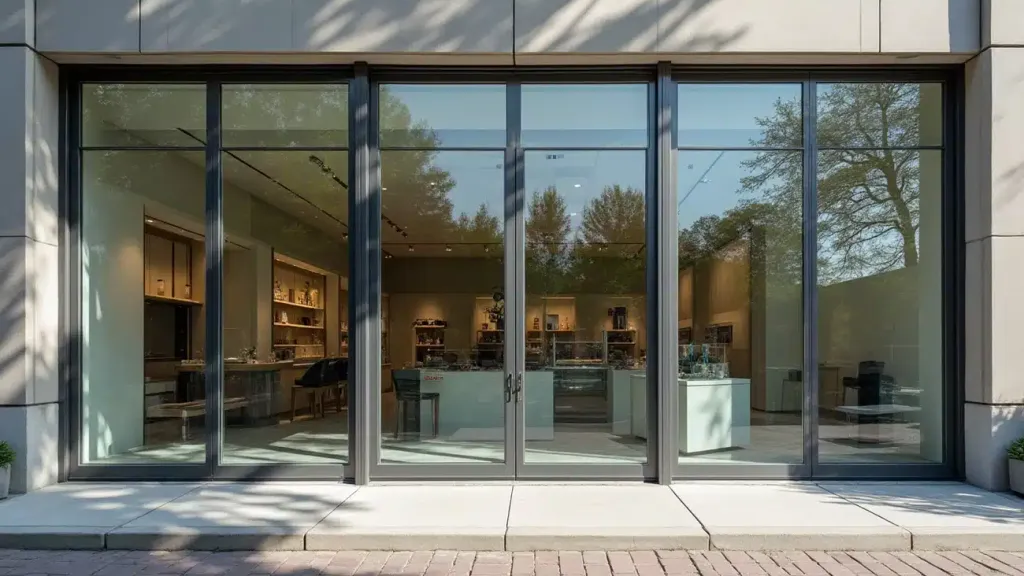
Tempered, laminated, and insulated glass aren’t three competing window brands. They describe different features, and a storefront glass unit can combine them.
For a business owner, the useful question is what you need the glazing to do. Reducing glare in a display window is a different problem from replacing broken safety glass or improving comfort beside a sunny storefront.
What the three terms mean
| Glass description | Main purpose | What it doesn’t establish by itself |
|---|---|---|
| Tempered | Heat-treated glass with a different breakage pattern from ordinary annealed glass | A complete security or forced-entry rating |
| Laminated | Glass layers bonded with an interlayer that can retain fragments after breakage | That the whole storefront will resist a particular impact or attack |
| Insulating glass unit, or IGU | Multiple panes separated by a sealed space to improve thermal performance | Whether its individual panes are safety glass |
Guardian’s safety-glass guide explains tempered and laminated safety glazing. Its fabrication information also describes insulating units made with tempered or laminated glass.
That combination is why ranking these categories from “least durable” to “most durable” would be misleading.
Match the specification to the actual problem
If glare makes merchandise hard to see, ask about reflectance and visible light transmission. Guardian’s storefront guidance discusses anti-reflective and laminated options for retail displays.
If the problem is heat near the glass, ask for the proposed unit’s thermal and solar-control data. A promised percentage reduction in the building’s energy bill needs more evidence than a glass brochure.
For security, have a glazing specialist identify the required tested performance of the entire system. Glass, framing, anchorage, and hardware work together. “Laminated” alone isn’t a security specification.
Inspect the surrounding system
A fogged space between panes, a leak, and a door that scrapes the frame are different faults. Ask the contractor to identify which component has failed before quoting a full replacement.
Photograph the issue from a safe location. Note whether water appears only during rain, whether fog is between the panes, and when a door began to bind. Keep people away from damaged or loose glass.
Don’t attempt to remove a large storefront pane or tighten unknown glazing hardware. The size and weight of the unit make that specialist work.
Compare quotes by specification
A useful proposal names the replacement glass makeup, dimensions, and applicable performance requirements. It should also cover removal, disposal, installation details, and the plan for keeping the opening secure during the job.
Ask who handles permits or design review where required, and how the work will affect customers and staff. Confirm whether any door hardware or frame repair is included.
Smart Fix can review ordinary commercial repair requests, but this article is not a claim that we design or replace every storefront glazing system. For glass selection and large-pane replacement, start with a qualified commercial glazing specialist and a written specification.
Need a Handyman You Can Trust?
Tell us what needs fixing. We’ll help you get a fair quote for the work.