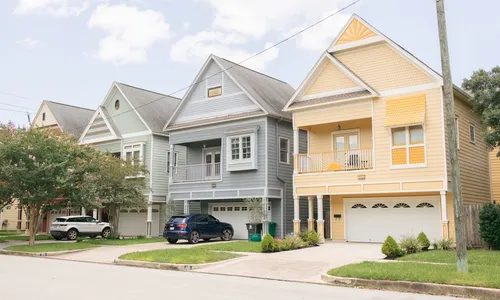
Spring shows up early in Dallas. By mid-February the trees start budding. By March we are already getting storm cells. By May the AC is running hard. If you wait until summer to think about home maintenance, you have already missed the window. This spring home maintenance checklist is what I tell my own techs to look for when we do a walk-through at a Dallas home. Eight items. Two hours of your Saturday. Way cheaper than the repairs you will need if you skip it.
When I was doing real estate inspections years ago, the same pattern came up every spring. The owner would call about a leak or a busted AC, and nine times out of ten the cause was something they could have caught in March if anyone had told them to look. So here is the list.
The Quick Version
Walk your roof, gutters, and foundation. Service the AC before May. Check caulk around windows and doors. Look at your deck, fence, and irrigation. Test smoke alarms. Total cost if you DIY most of it: about $200 in materials plus an HVAC tune-up of $89 to $150. Total cost if you hire it out: $500 to $1,200 depending on how many items you hand off. Either way, cheaper than a $3,500 AC compressor or an $1,800 ceiling repair from a leak.
1. Get Your AC Tuned Up Before May
This is item one for a reason. Dallas AC techs get slammed by Memorial Day. Call in March or early April and you will pay $89 to $150 for a tune-up that includes coil cleaning, refrigerant check, and a once-over on the blower. Wait until July when your unit dies and you are paying emergency rates, plus you will wait three to five days for parts. A 16-year-old system that gets a yearly tune-up lasts longer than a 10-year-old system that never gets touched. Replace the filter while you are at it. One-inch filters every 30 days. Four-inch filters every 90.
2. Walk Your Roof and Gutters
After winter storms and a few hail events, your roof took some hits. Stand back from the house and look up. Are shingles curled, cracked, or missing? Is the flashing around the chimney pulled away? Any spots where the granules have washed off and you can see black underneath? Do not climb up if you are not comfortable. Use binoculars from the ground or have someone come look. Clean the gutters too. North Dallas oak trees drop a lot of debris in March and April, and clogged gutters are the top cause of fascia rot we see.
Cost to clean gutters yourself: $0 and a ladder. Hire it out: $150 to $250 for a single-story, $250 to $400 for two-story.
3. Check Your Foundation
Dallas sits on clay soil. When winter rains soak it, the clay swells. When summer dries it out, the clay shrinks. Your slab moves a quarter inch in either direction every year. That is normal. What is not normal: hairline cracks wider than a credit card, doors that suddenly stick, or gaps where the trim meets the floor. Walk the outside of your house and look at the exposed slab. Hairline cracks under 1/8 inch are usually fine. Anything wider, or any horizontal step in a crack, get a foundation company out for a free inspection. In Dallas neighborhoods built in the 1980s and 1990s, we see foundation movement on maybe one in three calls.
Soak your soil. If you do not have a soaker hose around the perimeter of your foundation, that is the cheapest insurance you can buy. About $40 at Home Depot. Run it 20 minutes twice a week from June through September.
4. Re-caulk Windows and Doors
After a Texas winter, the caulk around windows and exterior doors is usually cracked or pulled away. Run your finger along the seams. If it crumbles or you can see daylight, scrape it out and lay a new bead of paintable silicone or polyurethane caulk. A tube costs $7. Doing this saves you on cooling bills all summer, and it keeps water out during May storms. Hit the trim around windows, the corners of garage door framing, and the gap where the door frame meets brick. If you want us to handle it, we wrap caulk and trim work into our standard exterior repairs service.
5. Inspect the Deck and Fence
DFW wind storms work fences over. Push on each post at the base. If it wiggles or you can rock it, that post is either rotted at ground level or the concrete footing has shifted. Look at the deck ledger board where it attaches to the house. That is the most common failure point. Loose lag bolts, rusted flashing, or rotted wood there can drop the whole deck.
A 6-foot cedar fence section runs $80 to $140 to replace, including labor. A single post replacement is around $120 to $180. Decks vary job-by-job, but ledger flashing repair on a basic deck is usually a half-day, $300 to $500.
6. Service Your Irrigation System
Run each zone for two minutes. Look for spraying heads that are not popping up, geysers, dry spots, and overspray hitting the side of the house. Sprinkler water on brick or stucco causes mineral staining, and over time it will damage mortar. Adjust heads, clean filters, and replace any heads that will not seat. A standard pop-up head costs $8 to $15. Most irrigation companies charge $85 to $150 for a spring check and adjustment if you would rather not deal with it.
7. Test Smoke and CO Detectors
I spent years as a firefighter before I ran this business. I will tell you straight: most homes I walked into during a fire had dead detector batteries. Push the test button on every smoke alarm and carbon monoxide detector. Replace 9-volts. If the unit itself is over 10 years old, replace it. Smoke alarms have an expiration date stamped on the back. After 10 years the sensor is done.
Cost: about $25 for a basic 10-year sealed smoke alarm, $40 for a combo smoke/CO. Putting them in is a 5-minute job per location. Worth doing today.
8. Flush the Water Heater and Check for Leaks
Dallas water is hard. Sediment builds up at the bottom of your tank, which makes it work harder and costs you on the gas or electric bill. Once a year, attach a garden hose to the drain valve and run it until the water comes out clear. Takes about 30 minutes. While you are down there, look under sinks and around toilets for puddles or rust stains. A toilet that rocks when you sit on it means the wax ring is gone. A faucet that drips is wasting about 2,400 gallons a year. We handle most of these on the same visit as part of light plumbing work.
Dallas Spring Timing Cheat Sheet
| Item | Best Window | Why |
|---|---|---|
| AC tune-up | March to April | Beat the May rush, $89 to $150 |
| Roof and gutters | After last storm in March | Before April hail season |
| Foundation check | Late March | See where spring rains pool |
| Caulk and windows | April | Before summer heat sets the new caulk |
| Deck and fence | Anytime in spring | Avoid June heat install |
| Irrigation tune | Early March | Before lawn needs water |
| Detectors | Now | No reason to wait |
| Water heater flush | April | Annual habit |
What Most Dallas Homeowners Skip
The two we see homeowners blow past every spring: foundation watering and caulk around windows. Both are cheap. Both prevent the most expensive repairs we run. If you do nothing else from this list, put a soaker hose down and lay a new bead of caulk around your windows. You will save thousands.
Frequently Asked Questions
When should I start spring home maintenance in Dallas?
Mid-February to early March. The Dallas growing season kicks off early and the AC system gets pushed by mid-April most years. Starting in February gives you time to space the work over a few weekends.
How much does a spring maintenance checkup cost in Dallas?
If you DIY everything except the AC tune-up, plan on about $200 to $300 in supplies and one HVAC service call at $89 to $150. If you hire a handyman to handle the whole list, expect $500 to $1,200 depending on what needs to be replaced versus inspected. The Smart Fix bills handyman work at $145 per hour with a $95 job minimum.
Do I need a professional or can I do this myself?
About 70% of the list is DIY-friendly. Roof inspections from the ground, caulk replacement, gutter cleaning if you are comfortable on a ladder, detector battery swaps, and water heater flushing are all homeowner jobs. AC service, foundation evaluation, and any deck ledger or fence post replacement are jobs to hand off.
What is different about home maintenance in Dallas versus other cities?
Clay soil and big temperature swings. Most of the Dallas metro sits on expansive clay. That moves your foundation. The temperature swings from a 30-degree February morning to a 100-degree July afternoon stress your roof, siding, and caulk faster than a steadier climate would. You cannot ignore the foundation, the gutters, or the caulk in Dallas the way you might in Phoenix or Seattle.
Can The Smart Fix do all of these in one visit?
Most of them, yes. Our techs are W-2 employees and we send the right person for the job. We do not do full HVAC service or deep foundation repair, but we can handle the rest of the list. Caulk, fence post repair, deck work, water heater flush, gutter cleaning, detector swaps, and any interior repairs that come out of the walkthrough. Project review if you want to send pictures first.
If you want this checked or handled, reach out through thesmartfixhandyman.com. We serve Dallas and the surrounding cities seven days a week.
Chance | The Smart Fix
Need a Handyman You Can Trust?
Skip the franchise fees. Get local expertise and honest pricing.